
Addis Ababa, Ethiopia – July 2025
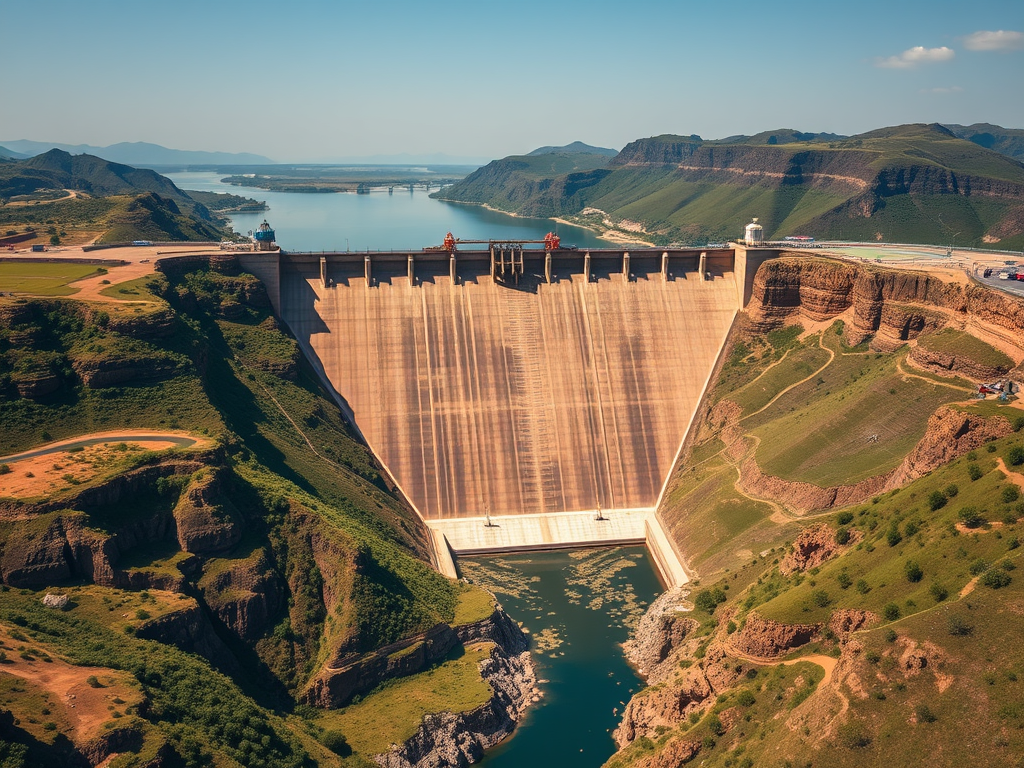
In a historic announcement, Ethiopia has declared the completion of the Grand Ethiopian Renaissance Dam (GERD), Africa’s largest hydroelectric project. Stretching across the Blue Nile and costing an estimated $4 to $5 billion, this colossal undertaking now stands as a symbol of national pride, regional ambition, and a testament to the leadership of Prime Minister Abiy Ahmed.

A Dream Fourteen Years in the Making
The GERD project, which began in 2011, has faced technical challenges, financial hurdles, and intense geopolitical pressure. Despite these obstacles, Ethiopia has now finalized the structural and functional aspects of the dam, which measures 1.8 kilometers in length and towers 145 meters high.
Once fully operational, the GERD is expected to generate over 6,000 megawatts of electricity—effectively doubling Ethiopia’s current power capacity. For a country where more than half of the population lacks access to reliable electricity, this marks a new era of industrial development, urbanization, and energy independence.
A Strategic Turning Point for Ethiopia and Africa
Beyond powering Ethiopian homes and businesses, the dam also positions the country as a major renewable energy exporter. Neighbors including Kenya, Djibouti, and Sudan stand to benefit from clean electricity as regional grids become more interconnected.

Prime Minister Abiy Ahmed, addressing parliament, called the GERD a “monument of sovereign determination,” emphasizing that Ethiopia’s development need not come at the expense of others. “We built this not to harm but to grow together,” he said. “The Nile is a river of all of us. Its abundance should unite, not divide us.”
His tone was notably diplomatic, extending an olive branch to Egypt and Sudan—countries that have long expressed concern over the dam’s impact on downstream water flows.
Reassurances Amid Regional Tensions
Egypt, which depends almost entirely on the Nile for freshwater, has viewed GERD with suspicion, warning it could reduce its share of water critical for agriculture and consumption. Sudan too has shared similar concerns, particularly regarding dam safety and water regulation.
Yet Ethiopia has steadily filled the dam’s reservoir in phases, attempting to balance its own development goals with regional dialogue. While formal negotiations between the three nations have faced repeated deadlocks, Prime Minister Abiy’s government has continued to signal openness to cooperation.
“We are not building bombs. We are building light,” Abiy declared, striking a conciliatory but firm tone.
Abiy Ahmed’s Legacy in the Making
For Prime Minister Abiy Ahmed, the completion of GERD may become one of the defining legacies of his administration. His tenure has seen the country through periods of conflict, reform, and rapid modernization. The dam now stands as both a literal and symbolic powerhouse—projecting Ethiopia’s aspirations for self-sufficiency and continental leadership.
Critics and allies alike must now acknowledge that under Abiy’s leadership, Ethiopia has succeeded in delivering a generational project with the potential to transform not only its economy but the geopolitical landscape of the Horn of Africa.
Looking Ahead
The official inauguration of the completed dam is scheduled for September 2025, promising a high-profile celebration that will likely be attended by regional leaders and international dignitaries. In the meantime, all 13 turbines are ready to spin, bringing Ethiopia closer to a future that once seemed like a distant dream.
With the GERD, Ethiopia is no longer just the source of the Nile—it has become the engine of a new African century.
MORE



Leave a Reply